
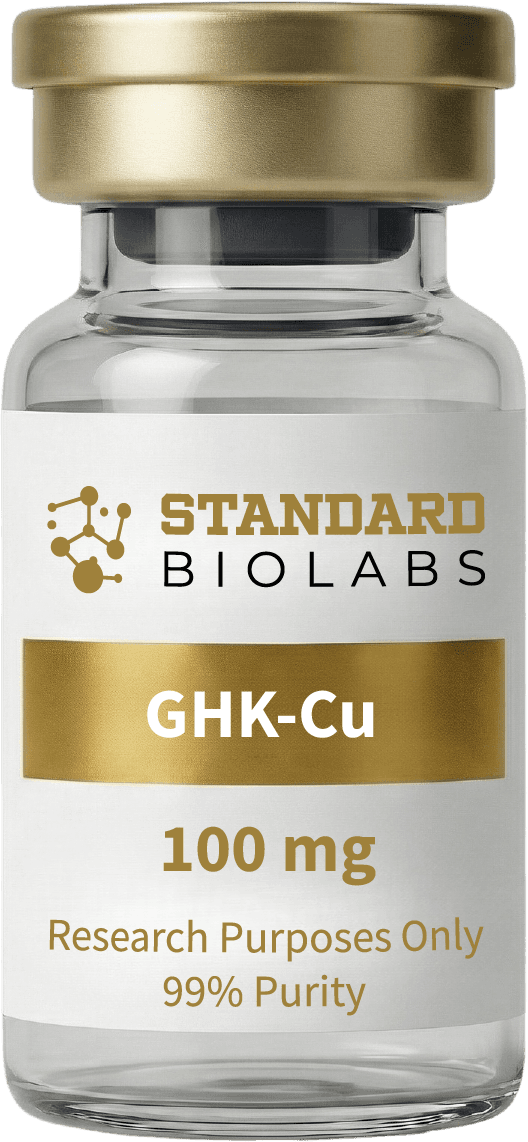
GHK-Cu
$
189 AUD
Product Info
GHK-Cu is a synthetic copper-peptide complex commonly used in laboratory research to study tissue remodeling, wound healing mechanisms, and matrix metalloproteinase regulation. It is of interest in controlled experimental settings examining collagen synthesis, angiogenesis pathways, and copper-dependent enzymatic activities in cellular models. GHK-Cu is supplied strictly for research purposes only and is not intended for human or veterinary use.
Buy 5 or more and save 10%
Categories
Bacteriostatic Water
AOD
Cagrilintide
Cagrilintide + Semaglutide
Retatrutide
Semaglutide
Tirzepatide
SLU PP 332
MOTS C
BPC 157
bpc-157-tb-500
Description
Overview
Biochemical Characteristics
Research Applications
Pathway / Mechanistic Context
Form & Analytical Testing
RUO Disclaimer


Overview
Biochemical Characteristics
Research Applications
Pathway / Mechanistic Context
Form & Analytical Testing
RUO Disclaimer
Overview
GHK-Cu is a bioactive copper peptide complex composed of the tripeptide glycine-histidine-lysine (GHK) bound to copper (Cu2+). The peptide sequence itself was first identified in human plasma as a naturally occurring factor with potent biological activity. When complexed with copper, GHK-Cu demonstrates enhanced stability, cellular uptake, and biological efficacy compared to the peptide alone. GHK-Cu has been extensively studied for its role in tissue remodeling, wound healing, and skin regeneration. The copper cofactor is essential for enzymatic activity, enabling GHK-Cu to activate multiple biological pathways including collagen synthesis, matrix metalloproteinase regulation, and antioxidant defense. Research demonstrates that GHK-Cu levels decline with age, contributing to impaired wound healing and reduced tissue regenerative capacity in aging organisms. GHK-Cu represents a valuable research tool for investigating tissue repair mechanisms, fibrotic diseases, and age-related decline in regenerative function.
Overview
GHK-Cu is a bioactive copper peptide complex composed of the tripeptide glycine-histidine-lysine (GHK) bound to copper (Cu2+). The peptide sequence itself was first identified in human plasma as a naturally occurring factor with potent biological activity. When complexed with copper, GHK-Cu demonstrates enhanced stability, cellular uptake, and biological efficacy compared to the peptide alone. GHK-Cu has been extensively studied for its role in tissue remodeling, wound healing, and skin regeneration. The copper cofactor is essential for enzymatic activity, enabling GHK-Cu to activate multiple biological pathways including collagen synthesis, matrix metalloproteinase regulation, and antioxidant defense. Research demonstrates that GHK-Cu levels decline with age, contributing to impaired wound healing and reduced tissue regenerative capacity in aging organisms. GHK-Cu represents a valuable research tool for investigating tissue repair mechanisms, fibrotic diseases, and age-related decline in regenerative function.
Biochemical Characteristics
GHK-Cu consists of a tripeptide sequence (Gly-His-Lys) complexed with cupric copper (Cu2+) in a 1:1 molar ratio, with a combined molecular weight of approximately 404 Da. The histidine residue provides the primary copper coordination site through its imidazole nitrogen, while the glycine N-terminus and lysine residue contribute additional coordination interactions. This chelation creates a stable, water-soluble complex that resists dissociation under physiological conditions while remaining bioavailable for cellular interaction. The copper center is essential for biological activity, enabling electron transfer reactions and redox-dependent enzymatic processes. The peptide backbone contributes to cellular recognition and receptor binding, while the copper moiety provides catalytic function. GHK-Cu exhibits excellent solubility in aqueous solutions across physiological pH ranges (6.5–8.0) and demonstrates stability at body temperature. The complex resists enzymatic degradation better than the uncomplexed peptide, conferring extended in vivo half-life. The peptide localizes to extracellular matrix and cell surface receptor regions, with cellular internalization occurring through both receptor-mediated and fluid-phase endocytosis pathways.
Biochemical Characteristics
GHK-Cu consists of a tripeptide sequence (Gly-His-Lys) complexed with cupric copper (Cu2+) in a 1:1 molar ratio, with a combined molecular weight of approximately 404 Da. The histidine residue provides the primary copper coordination site through its imidazole nitrogen, while the glycine N-terminus and lysine residue contribute additional coordination interactions. This chelation creates a stable, water-soluble complex that resists dissociation under physiological conditions while remaining bioavailable for cellular interaction. The copper center is essential for biological activity, enabling electron transfer reactions and redox-dependent enzymatic processes. The peptide backbone contributes to cellular recognition and receptor binding, while the copper moiety provides catalytic function. GHK-Cu exhibits excellent solubility in aqueous solutions across physiological pH ranges (6.5–8.0) and demonstrates stability at body temperature. The complex resists enzymatic degradation better than the uncomplexed peptide, conferring extended in vivo half-life. The peptide localizes to extracellular matrix and cell surface receptor regions, with cellular internalization occurring through both receptor-mediated and fluid-phase endocytosis pathways.
Research Applications
Wound Healing & Tissue RepairInvestigation of accelerated wound closure, enhanced re-epithelialization, and fibroblast proliferation in wound healing models. Collagen Synthesis & DepositionAssessment of upregulation of type I and III collagen production and extracellular matrix deposition in skin and connective tissue. Matrix RemodelingStudy of modulation of matrix metalloproteinase (MMP) expression and activity, and regulation of tissue inhibitors of metalloproteinases (TIMPs) for balanced matrix turnover. Skin Regeneration & Anti-AgingEvaluation of enhancement of dermal fibroblast function, increased skin thickness, and improved skin quality in aging models. Angiogenesis & VascularizationInvestigation of promotion of new blood vessel formation and improved tissue perfusion in ischemic and regenerating tissues. Hair Growth & Follicle HealthStudy of stimulation of hair follicle cycling and enhanced hair growth in dermal papilla and follicle cells. Fibrosis & Scar PreventionAssessment of modulation of fibrotic responses and reduction of excessive collagen deposition in scar tissue and organ fibrosis models. Immune & Inflammatory ModulationExamination of regulation of inflammatory cytokine production and enhancement of immune cell function in wound healing contexts. Connective Tissue DiseasesInvestigation of therapeutic potential in conditions involving connective tissue dysfunction and impaired collagen metabolism.
Research Applications
Wound Healing & Tissue RepairInvestigation of accelerated wound closure, enhanced re-epithelialization, and fibroblast proliferation in wound healing models. Collagen Synthesis & DepositionAssessment of upregulation of type I and III collagen production and extracellular matrix deposition in skin and connective tissue. Matrix RemodelingStudy of modulation of matrix metalloproteinase (MMP) expression and activity, and regulation of tissue inhibitors of metalloproteinases (TIMPs) for balanced matrix turnover. Skin Regeneration & Anti-AgingEvaluation of enhancement of dermal fibroblast function, increased skin thickness, and improved skin quality in aging models. Angiogenesis & VascularizationInvestigation of promotion of new blood vessel formation and improved tissue perfusion in ischemic and regenerating tissues. Hair Growth & Follicle HealthStudy of stimulation of hair follicle cycling and enhanced hair growth in dermal papilla and follicle cells. Fibrosis & Scar PreventionAssessment of modulation of fibrotic responses and reduction of excessive collagen deposition in scar tissue and organ fibrosis models. Immune & Inflammatory ModulationExamination of regulation of inflammatory cytokine production and enhancement of immune cell function in wound healing contexts. Connective Tissue DiseasesInvestigation of therapeutic potential in conditions involving connective tissue dysfunction and impaired collagen metabolism.
Pathway / Mechanistic Context
Collagen Synthesis GHK-Cu activates TGF-β signaling pathways through cell surface receptor binding, triggering SMAD-dependent upregulation of collagen genes. MMP Regulation The complex modulates matrix metalloproteinase expression for balanced extracellular matrix turnover during tissue remodeling. Copper Enzymatic Activity Copper serves as cofactor for lysyl oxidase (collagen cross-linking) and cytochrome c oxidase (cellular energy production). Fibroblast Proliferation GHK-Cu stimulates fibroblast proliferation through FGF receptor and MAPK/ERK pathway activation. Angiogenic Factor Production Enhancement of VEGF and FGF expression promotes vascularization of regenerating tissues. Integrin Signaling Binding to integrin α2β1 activates cell-matrix interaction pathways essential for wound healing.
Pathway / Mechanistic Context
Collagen Synthesis GHK-Cu activates TGF-β signaling pathways through cell surface receptor binding, triggering SMAD-dependent upregulation of collagen genes. MMP Regulation The complex modulates matrix metalloproteinase expression for balanced extracellular matrix turnover during tissue remodeling. Copper Enzymatic Activity Copper serves as cofactor for lysyl oxidase (collagen cross-linking) and cytochrome c oxidase (cellular energy production). Fibroblast Proliferation GHK-Cu stimulates fibroblast proliferation through FGF receptor and MAPK/ERK pathway activation. Angiogenic Factor Production Enhancement of VEGF and FGF expression promotes vascularization of regenerating tissues. Integrin Signaling Binding to integrin α2β1 activates cell-matrix interaction pathways essential for wound healing.
Preclinical Research Summary
GHK-Cu is supplied as sterile aqueous solution or lyophilized powder at concentrations of 1–10 mg/mL. Storage at 2–8°C; shelf-life 12–24 months for solutions, 24–36 months for lyophilized material. Analytical testing includes HPLC purity verification (≥95%), HPLC-MS molecular confirmation, ICP-MS copper content determination, amino acid analysis, and microbial sterility/endotoxin testing. Certificate of Analysis provided with each lot.
Preclinical Research Summary
GHK-Cu is supplied as sterile aqueous solution or lyophilized powder at concentrations of 1–10 mg/mL. Storage at 2–8°C; shelf-life 12–24 months for solutions, 24–36 months for lyophilized material. Analytical testing includes HPLC purity verification (≥95%), HPLC-MS molecular confirmation, ICP-MS copper content determination, amino acid analysis, and microbial sterility/endotoxin testing. Certificate of Analysis provided with each lot.
RUO Disclaimer
RESEARCH USE ONLY (RUO) This product is intended exclusively for laboratory research and is not approved for clinical use or human/animal administration. Not manufactured for pharmaceutical use. Users assume responsibility for suitability determination, proper storage, safety compliance, and regulatory adherence. Institutional approval (IACUC, IRB) may be required. Information provided is for research reference only and does not constitute medical advice or therapeutic claims.
RUO Disclaimer
RESEARCH USE ONLY (RUO) This product is intended exclusively for laboratory research and is not approved for clinical use or human/animal administration. Not manufactured for pharmaceutical use. Users assume responsibility for suitability determination, proper storage, safety compliance, and regulatory adherence. Institutional approval (IACUC, IRB) may be required. Information provided is for research reference only and does not constitute medical advice or therapeutic claims.

We are committed to supporting all research customers with consistent standards and professional care.

Subscribe
Subscribe to stay updated at every moment about all our news and product drops.
Terms of Service
Refund Policy
Privacy Policy
Promotional Terms

© Standard BioLabs. All rights reserved.
All products on this site are designated for Research Use Only and are supplied solely for laboratory, analytical, or scientific research purposes by qualified professionals. Products are not intended for human or animal use, and no diagnostic, therapeutic, or clinical use is intended or implied.
Standard BioLabs is a chemical supplier. Standard BioLabs is not a compounding pharmacy or chemical compounding facility as defined under 503A of the Federal Food, Drug, and Cosmetic Act. Standard BioLabs is not an outsourcing facility as defined under 503B of the Federal Food, Drug, and Cosmetic Act.
We are committed to supporting all research customers with consistent standards and professional care.
Subscribe
Subscribe to stay updated at every moment about all our news and product drops.
Terms of Service
Refund Policy
Privacy Policy
Promotional Terms
© Standard BioLabs. All rights reserved.
All products on this site are designated for Research Use Only and are supplied solely for laboratory, analytical, or scientific research purposes by qualified professionals. Products are not intended for human or animal use, and no diagnostic, therapeutic, or clinical use is intended or implied.
Standard BioLabs is a chemical supplier. Standard BioLabs is not a compounding pharmacy or chemical compounding facility as defined under 503A of the Federal Food, Drug, and Cosmetic Act. Standard BioLabs is not an outsourcing facility as defined under 503B of the Federal Food, Drug, and Cosmetic Act.
We are committed to supporting all research customers with consistent standards and professional care.
Subscribe
Subscribe to stay updated at every moment about all our news and product drops.
Terms of Service
Refund Policy
Privacy Policy
Promotional Terms
All products on this site are designated for Research Use Only and are supplied solely for laboratory, analytical, or scientific research purposes by qualified professionals. Products are not intended for human or animal use, and no diagnostic, therapeutic, or clinical use is intended or implied.
Standard BioLabs is a chemical supplier. Standard BioLabs is not a compounding pharmacy or chemical compounding facility as defined under 503A of the Federal Food, Drug, and Cosmetic Act. Standard BioLabs is not an outsourcing facility as defined under 503B of the Federal Food, Drug, and Cosmetic Act.
© Standard BioLabs. All rights reserved.