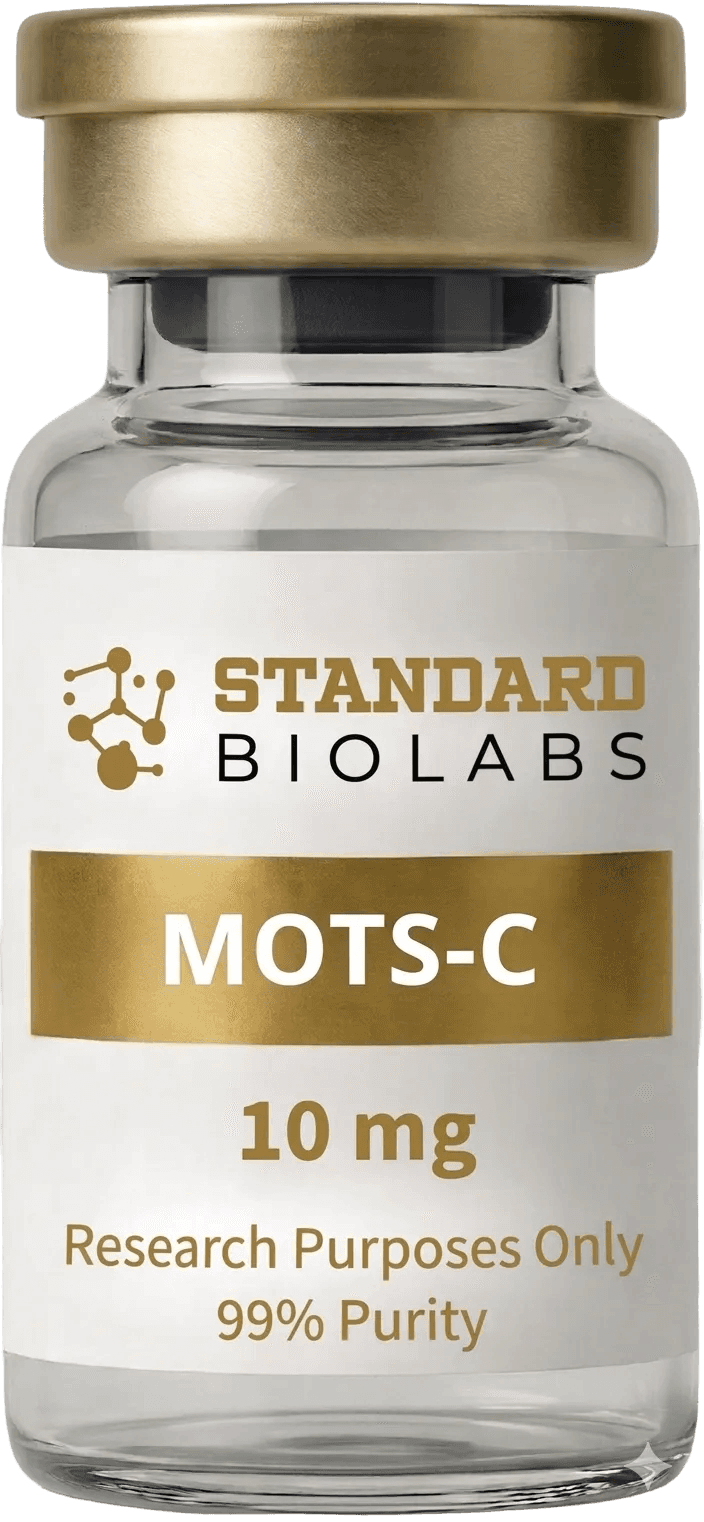
MOTS-C
$
380 AUD
Product Info
MOTS‑C is a synthetic peptide derived from a mitochondrial-encoded open reading frame, commonly used in laboratory research to study metabolic regulation, energy homeostasis, and cellular signalling. It is of interest in controlled experimental settings investigating mitochondrial function, glucose and lipid metabolism, and peptide-mediated metabolic pathways. MOTS‑C is supplied strictly for research purposes only and is not intended for human or veterinary use.
Buy 3 and save 15%
Buy 5 and save 20%
Categories
Bacteriostatic Water
AOD
Cagrilintide
Cagrilintide + Semaglutide
Retatrutide
Semaglutide
Tirzepatide
SLU PP 332
MOTS C
BPC 157
bpc-157-tb-500
Description
Overview
Biochemical Characteristics
Research Applications
Pathway / Mechanistic Context
Form & Analytical Testing
RUO Disclaimer


Overview
Biochemical Characteristics
Research Applications
Pathway / Mechanistic Context
Form & Analytical Testing
RUO Disclaimer
Overview
MOTS-C is a 16-amino acid mitochondrial-derived peptide encoded within the mitochondrial genome (mitochondrial open reading frame of the 12S rRNA-c region). The peptide is secreted from cells and functions as a hormone-like signaling molecule regulating metabolic health, stress resilience, and longevity. MOTS-C is extensively studied for its potential in supporting metabolic function, glucose homeostasis, and age-related metabolic decline. Research indicates the peptide activates AMPK signaling, enhances mitochondrial biogenesis, and promotes metabolic adaptation to nutrient stress. MOTS-C represents a valuable research tool for investigating mitochondrial-metabolic signaling, metabolic adaptation mechanisms, and therapeutic approaches to metabolic dysfunction and aging.
Overview
MOTS-C is a 16-amino acid mitochondrial-derived peptide encoded within the mitochondrial genome (mitochondrial open reading frame of the 12S rRNA-c region). The peptide is secreted from cells and functions as a hormone-like signaling molecule regulating metabolic health, stress resilience, and longevity. MOTS-C is extensively studied for its potential in supporting metabolic function, glucose homeostasis, and age-related metabolic decline. Research indicates the peptide activates AMPK signaling, enhances mitochondrial biogenesis, and promotes metabolic adaptation to nutrient stress. MOTS-C represents a valuable research tool for investigating mitochondrial-metabolic signaling, metabolic adaptation mechanisms, and therapeutic approaches to metabolic dysfunction and aging.
Biochemical Characteristics
MOTS-C is a 16-amino acid peptide with molecular weight of approximately 2,002 Da. The peptide is encoded within the mitochondrial 12S rRNA region and is processed by mitochondrial proteases before secretion into circulation. The peptide is water-soluble and demonstrates stability across physiological pH ranges (6.5–8.0). MOTS-C crosses the blood-brain barrier and distributes throughout central and peripheral tissues. The peptide shows moderate enzymatic resistance with biological half-life supporting sustained metabolic effects. Cellular uptake occurs through receptor-mediated mechanisms and peptide transporter pathways. The peptide localizes to multiple tissues including muscle, adipose tissue, liver, and brain where metabolic effects are exerted.
Biochemical Characteristics
MOTS-C is a 16-amino acid peptide with molecular weight of approximately 2,002 Da. The peptide is encoded within the mitochondrial 12S rRNA region and is processed by mitochondrial proteases before secretion into circulation. The peptide is water-soluble and demonstrates stability across physiological pH ranges (6.5–8.0). MOTS-C crosses the blood-brain barrier and distributes throughout central and peripheral tissues. The peptide shows moderate enzymatic resistance with biological half-life supporting sustained metabolic effects. Cellular uptake occurs through receptor-mediated mechanisms and peptide transporter pathways. The peptide localizes to multiple tissues including muscle, adipose tissue, liver, and brain where metabolic effects are exerted.
Research Applications
Glucose Homeostasis Investigation of MOTS-C-induced enhancement of glucose uptake and insulin sensitivity in metabolic tissues. Metabolic Flexibility Assessment of improved metabolic switching between glucose and fatty acid oxidation. Physical Performance Study of enhanced exercise capacity, endurance, and metabolic adaptation to physical stress. Mitochondrial Biogenesis Investigation of MOTS-C-induced activation of mitochondrial biogenesis and oxidative capacity. Age-Related Metabolic Decline Assessment of restoration of metabolic function in aging models and age-related metabolic dysfunction. Stress Resistance Study of enhanced cellular stress resilience and resistance to metabolic stress. Body Composition Investigation of improvements in lean mass maintenance and metabolic rate in aging.
Research Applications
Glucose Homeostasis Investigation of MOTS-C-induced enhancement of glucose uptake and insulin sensitivity in metabolic tissues. Metabolic Flexibility Assessment of improved metabolic switching between glucose and fatty acid oxidation. Physical Performance Study of enhanced exercise capacity, endurance, and metabolic adaptation to physical stress. Mitochondrial Biogenesis Investigation of MOTS-C-induced activation of mitochondrial biogenesis and oxidative capacity. Age-Related Metabolic Decline Assessment of restoration of metabolic function in aging models and age-related metabolic dysfunction. Stress Resistance Study of enhanced cellular stress resilience and resistance to metabolic stress. Body Composition Investigation of improvements in lean mass maintenance and metabolic rate in aging.
Pathway / Mechanistic Context
AMPK Activation MOTS-C activates AMP-activated protein kinase (AMPK) through unknown receptor mechanisms, triggering downstream metabolic reprogramming and enhancement of catabolic pathways. Glucose Uptake Enhancement MOTS-C-induced AMPK activation enhances GLUT4 translocation to cell surface in muscle and promotes glucose uptake through both insulin-dependent and insulin-independent mechanisms. Mitochondrial Biogenesis The peptide activates PGC-1α and SIRT1 through AMPK-dependent pathways, promoting mitochondrial biogenesis, oxidative capacity, and energy metabolism enhancement. Fatty Acid Oxidation MOTS-C enhances activation of CPT1 and fatty acid oxidation pathways through AMPK signaling, promoting utilization of lipids as metabolic fuel. Stress Response Adaptation The peptide promotes cellular adaptation to nutrient stress and metabolic challenge through activation of stress-responsive transcription factors and autophagy pathways. Exercise Mimicry MOTS-C engages AMPK-dependent signaling cascades similar to exercise, promoting exercise-like metabolic adaptations including enhanced endurance and oxidative capacity.
Pathway / Mechanistic Context
AMPK Activation MOTS-C activates AMP-activated protein kinase (AMPK) through unknown receptor mechanisms, triggering downstream metabolic reprogramming and enhancement of catabolic pathways. Glucose Uptake Enhancement MOTS-C-induced AMPK activation enhances GLUT4 translocation to cell surface in muscle and promotes glucose uptake through both insulin-dependent and insulin-independent mechanisms. Mitochondrial Biogenesis The peptide activates PGC-1α and SIRT1 through AMPK-dependent pathways, promoting mitochondrial biogenesis, oxidative capacity, and energy metabolism enhancement. Fatty Acid Oxidation MOTS-C enhances activation of CPT1 and fatty acid oxidation pathways through AMPK signaling, promoting utilization of lipids as metabolic fuel. Stress Response Adaptation The peptide promotes cellular adaptation to nutrient stress and metabolic challenge through activation of stress-responsive transcription factors and autophagy pathways. Exercise Mimicry MOTS-C engages AMPK-dependent signaling cascades similar to exercise, promoting exercise-like metabolic adaptations including enhanced endurance and oxidative capacity.
Preclinical Research Summary
MOTS-C is supplied as sterile aqueous solution or lyophilized powder at concentrations of 1–10 mg/mL. Storage at 2–8°C; shelf-life 12–24 months for solutions, 24–36 months for lyophilized material. Analytical testing includes HPLC purity verification (≥95%), HPLC-MS molecular confirmation, amino acid analysis, and microbial sterility/endotoxin testing. Bioassay verification of AMPK activation available upon request. Certificate of Analysis provided with each lot.
Preclinical Research Summary
MOTS-C is supplied as sterile aqueous solution or lyophilized powder at concentrations of 1–10 mg/mL. Storage at 2–8°C; shelf-life 12–24 months for solutions, 24–36 months for lyophilized material. Analytical testing includes HPLC purity verification (≥95%), HPLC-MS molecular confirmation, amino acid analysis, and microbial sterility/endotoxin testing. Bioassay verification of AMPK activation available upon request. Certificate of Analysis provided with each lot.
RUO Disclaimer
RESEARCH USE ONLY (RUO) This product is intended exclusively for laboratory research and is not approved for clinical use or human/animal administration. Not manufactured for pharmaceutical use. Users assume responsibility for suitability determination, proper storage, safety compliance, and regulatory adherence. Institutional approval (IACUC, IRB) may be required. Information provided is for research reference only and does not constitute medical advice or therapeutic claims.
RUO Disclaimer
RESEARCH USE ONLY (RUO) This product is intended exclusively for laboratory research and is not approved for clinical use or human/animal administration. Not manufactured for pharmaceutical use. Users assume responsibility for suitability determination, proper storage, safety compliance, and regulatory adherence. Institutional approval (IACUC, IRB) may be required. Information provided is for research reference only and does not constitute medical advice or therapeutic claims.
We are committed to supporting all research customers with consistent standards and professional care.

Subscribe
Subscribe to stay updated at every moment about all our news and product drops.
Terms of Service
Refund Policy
Privacy Policy
Promotional Terms

© Standard BioLabs. All rights reserved.
All products on this site are designated for Research Use Only and are supplied solely for laboratory, analytical, or scientific research purposes by qualified professionals. Products are not intended for human or animal use, and no diagnostic, therapeutic, or clinical use is intended or implied.
Standard BioLabs is a chemical supplier. Standard BioLabs is not a compounding pharmacy or chemical compounding facility as defined under 503A of the Federal Food, Drug, and Cosmetic Act. Standard BioLabs is not an outsourcing facility as defined under 503B of the Federal Food, Drug, and Cosmetic Act.
We are committed to supporting all research customers with consistent standards and professional care.
Subscribe
Subscribe to stay updated at every moment about all our news and product drops.
Terms of Service
Refund Policy
Privacy Policy
Promotional Terms
© Standard BioLabs. All rights reserved.
All products on this site are designated for Research Use Only and are supplied solely for laboratory, analytical, or scientific research purposes by qualified professionals. Products are not intended for human or animal use, and no diagnostic, therapeutic, or clinical use is intended or implied.
Standard BioLabs is a chemical supplier. Standard BioLabs is not a compounding pharmacy or chemical compounding facility as defined under 503A of the Federal Food, Drug, and Cosmetic Act. Standard BioLabs is not an outsourcing facility as defined under 503B of the Federal Food, Drug, and Cosmetic Act.
We are committed to supporting all research customers with consistent standards and professional care.
Subscribe
Subscribe to stay updated at every moment about all our news and product drops.
Terms of Service
Refund Policy
Privacy Policy
Promotional Terms
All products on this site are designated for Research Use Only and are supplied solely for laboratory, analytical, or scientific research purposes by qualified professionals. Products are not intended for human or animal use, and no diagnostic, therapeutic, or clinical use is intended or implied.
Standard BioLabs is a chemical supplier. Standard BioLabs is not a compounding pharmacy or chemical compounding facility as defined under 503A of the Federal Food, Drug, and Cosmetic Act. Standard BioLabs is not an outsourcing facility as defined under 503B of the Federal Food, Drug, and Cosmetic Act.
© Standard BioLabs. All rights reserved.