
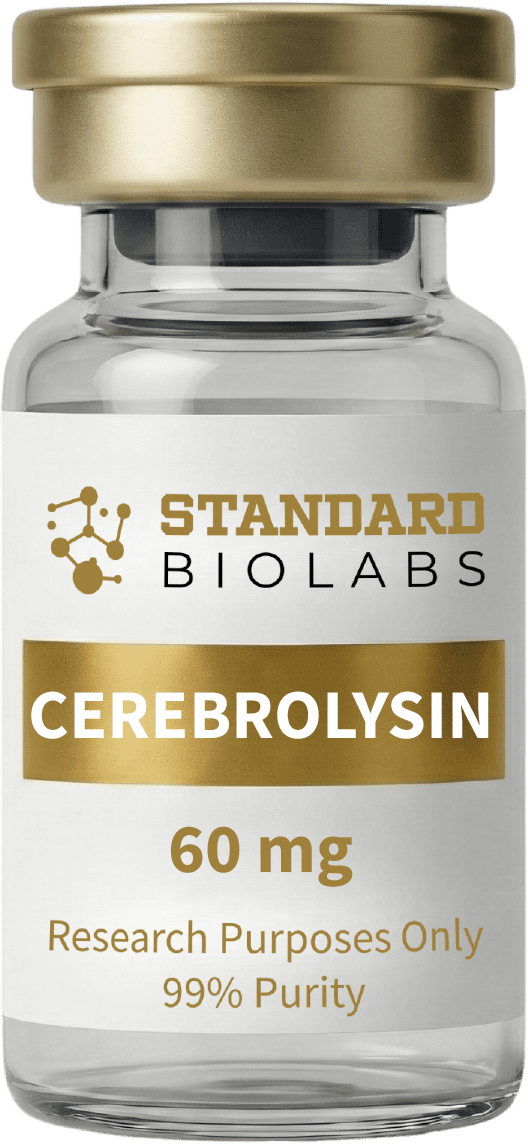
CEREBROLYSIN
$
289 AUD
Product Info
Cerebrolysin is a peptide-based research preparation derived from porcine brain tissue, containing a mixture of low molecular weight neuropeptides and amino acids. It is commonly used in controlled laboratory studies to explore neuroprotection, neuroplasticity, and neurotrophic signaling pathways. Cerebrolysin is of interest for research into neuronal survival, synaptic function, cognitive processes, and neurodegenerative mechanisms. This compound is supplied strictly for research purposes only and is not intended for human or veterinary use.
Buy 5 or more and save 10%
Categories
Bacteriostatic Water
AOD
Cagrilintide
Cagrilintide + Semaglutide
Retatrutide
Semaglutide
Tirzepatide
SLU PP 332
MOTS C
BPC 157
bpc-157-tb-500
Description
Overview
Biochemical Characteristics
Research Applications
Pathway / Mechanistic Context
Form & Analytical Testing
RUO Disclaimer


Overview
Biochemical Characteristics
Research Applications
Pathway / Mechanistic Context
Form & Analytical Testing
RUO Disclaimer
Overview
Cerebrolysin is a standardized neuropeptide composition derived from porcine brain tissue through enzymatic proteolysis. It consists of a mixture of low molecular weight peptides and amino acids (molecular weight range: 350–10,000 Da) designed to mimic the neurotrophic and neuroprotective properties of endogenous brain-derived factors. Originally developed for clinical neurological applications, Cerebrolysin has become a significant subject of research investigating its effects on neurodegeneration, cognitive function, and neural plasticity across multiple disease models.
Overview
Cerebrolysin is a standardized neuropeptide composition derived from porcine brain tissue through enzymatic proteolysis. It consists of a mixture of low molecular weight peptides and amino acids (molecular weight range: 350–10,000 Da) designed to mimic the neurotrophic and neuroprotective properties of endogenous brain-derived factors. Originally developed for clinical neurological applications, Cerebrolysin has become a significant subject of research investigating its effects on neurodegeneration, cognitive function, and neural plasticity across multiple disease models.
Biochemical Characteristics
Cerebrolysin is a complex peptide mixture containing approximately 80% peptides and 20% free amino acids. The peptide fraction comprises various bioactive components including neuroactive peptides that readily cross the blood-brain barrier due to their low molecular weight. The composition includes glutamate, aspartate, and other excitatory amino acids, alongside protective amino acids such as proline and hydroxyproline. This heterogeneous peptide profile enables multi-target interactions within neural tissue. The peptide components are standardised by molecular weight distribution and amino acid composition, with stability maintained under physiological pH and temperature conditions. Its amphipathic nature facilitates cellular uptake through both receptor-mediated and non-receptor-mediated endocytosis pathways.
Biochemical Characteristics
Cerebrolysin is a complex peptide mixture containing approximately 80% peptides and 20% free amino acids. The peptide fraction comprises various bioactive components including neuroactive peptides that readily cross the blood-brain barrier due to their low molecular weight. The composition includes glutamate, aspartate, and other excitatory amino acids, alongside protective amino acids such as proline and hydroxyproline. This heterogeneous peptide profile enables multi-target interactions within neural tissue. The peptide components are standardised by molecular weight distribution and amino acid composition, with stability maintained under physiological pH and temperature conditions. Its amphipathic nature facilitates cellular uptake through both receptor-mediated and non-receptor-mediated endocytosis pathways.
Research Applications
Cerebrolysin is extensively studied in neuroscience research for its potential effects on: Neurodegenerative diseases: Investigating mechanisms relevant to Alzheimer's disease, Parkinson's disease, and age-related cognitive decline Cerebral ischemia models: Examining neuroprotective responses in stroke and hypoxic-ischemic injury paradigms Traumatic brain injury (TBI): Evaluating recovery and neuroplasticity enhancement following acute neural trauma Cognitive enhancement: Assessing effects on learning, memory consolidation, and synaptic function in both healthy and impaired models Neuroinflammation: Studying modulation of neuroinflammatory pathways and microglial activation Neural regeneration: Exploring axonal growth promotion and dendritic plasticity in injury recovery contexts Researchers utilize Cerebrolysin as a tool compound to understand trophic signaling and neuroprotective mechanisms relevant to multiple CNS pathologies.
Research Applications
Cerebrolysin is extensively studied in neuroscience research for its potential effects on: Neurodegenerative diseases: Investigating mechanisms relevant to Alzheimer's disease, Parkinson's disease, and age-related cognitive decline Cerebral ischemia models: Examining neuroprotective responses in stroke and hypoxic-ischemic injury paradigms Traumatic brain injury (TBI): Evaluating recovery and neuroplasticity enhancement following acute neural trauma Cognitive enhancement: Assessing effects on learning, memory consolidation, and synaptic function in both healthy and impaired models Neuroinflammation: Studying modulation of neuroinflammatory pathways and microglial activation Neural regeneration: Exploring axonal growth promotion and dendritic plasticity in injury recovery contexts Researchers utilize Cerebrolysin as a tool compound to understand trophic signaling and neuroprotective mechanisms relevant to multiple CNS pathologies.
Pathway / Mechanistic Context
Cerebrolysin is proposed to operate through multiple complementary mechanisms. The peptide components are thought to activate neurotrophic signaling cascades, including pathways associated with nerve growth factor (NGF), brain-derived neurotrophic factor (BDNF), and other growth factors. Key proposed mechanisms include: Neurotropic effects: Enhancement of neuronal survival, differentiation, and dendritic sprouting through trophic signaling Neuroprotection: Reduction of excitotoxicity and oxidative stress through modulation of glutamate homeostasis and antioxidant defense systems Synaptic plasticity: Facilitation of long-term potentiation (LTP) and strengthening of synaptic transmission Mitochondrial support: Enhancement of cellular energy metabolism and mitochondrial function in stressed neurons Neuroinflammatory modulation: Suppression of pro-inflammatory cytokine production and promotion of anti-inflammatory responses The heterogeneous peptide composition allows simultaneous engagement of multiple receptor systems and intracellular targets, creating a polypharmacological profile relevant to complex neurobiological conditions.
Pathway / Mechanistic Context
Cerebrolysin is proposed to operate through multiple complementary mechanisms. The peptide components are thought to activate neurotrophic signaling cascades, including pathways associated with nerve growth factor (NGF), brain-derived neurotrophic factor (BDNF), and other growth factors. Key proposed mechanisms include: Neurotropic effects: Enhancement of neuronal survival, differentiation, and dendritic sprouting through trophic signaling Neuroprotection: Reduction of excitotoxicity and oxidative stress through modulation of glutamate homeostasis and antioxidant defense systems Synaptic plasticity: Facilitation of long-term potentiation (LTP) and strengthening of synaptic transmission Mitochondrial support: Enhancement of cellular energy metabolism and mitochondrial function in stressed neurons Neuroinflammatory modulation: Suppression of pro-inflammatory cytokine production and promotion of anti-inflammatory responses The heterogeneous peptide composition allows simultaneous engagement of multiple receptor systems and intracellular targets, creating a polypharmacological profile relevant to complex neurobiological conditions.
Preclinical Research Summary
Cerebrolysin is typically supplied as a sterile aqueous solution (10 mg/mL standard concentration) in pharmaceutical-grade vials suitable for in vitro research applications. The product undergoes rigorous analytical characterization including: Amino acid analysis: HPLC quantification of constituent amino acid composition Molecular weight distribution: Size-exclusion chromatography (SEC) verification of peptide MW range (350–10,000 Da) Protein/peptide content: Biuret or Bradford assays confirming peptide concentration Microbial sterility: USP/EP sterility testing protocols Endotoxin levels: LAL testing confirming acceptable pyrogenicity standards pH & osmolarity: Verification of physiological compatibility HPLC purity: Assessment of peptide profile consistency and absence of major contaminants Product stability is maintained at 2–8°C, with typical shelf-life of 24–36 months when stored appropriately.
Preclinical Research Summary
Cerebrolysin is typically supplied as a sterile aqueous solution (10 mg/mL standard concentration) in pharmaceutical-grade vials suitable for in vitro research applications. The product undergoes rigorous analytical characterization including: Amino acid analysis: HPLC quantification of constituent amino acid composition Molecular weight distribution: Size-exclusion chromatography (SEC) verification of peptide MW range (350–10,000 Da) Protein/peptide content: Biuret or Bradford assays confirming peptide concentration Microbial sterility: USP/EP sterility testing protocols Endotoxin levels: LAL testing confirming acceptable pyrogenicity standards pH & osmolarity: Verification of physiological compatibility HPLC purity: Assessment of peptide profile consistency and absence of major contaminants Product stability is maintained at 2–8°C, with typical shelf-life of 24–36 months when stored appropriately.
RUO Disclaimer
RESEARCH USE ONLY (RUO) This product is intended for laboratory research purposes only and is not approved for clinical use, diagnostic procedures, or human administration. Cerebrolysin is provided for in vitro and in vivo research applications in qualified research facilities under appropriate regulatory oversight. This product is not manufactured, processed, or tested for pharmaceutical or therapeutic use. Researchers are responsible for determining the suitability of this product for their specific research applications and for compliance with all applicable regulations and institutional guidelines governing its use. The information provided is for research reference only and does not constitute medical advice or claims of efficacy. Users assume all responsibility for proper handling, storage, and appropriate use according to institutional biosafety and research protocols.
RUO Disclaimer
RESEARCH USE ONLY (RUO) This product is intended for laboratory research purposes only and is not approved for clinical use, diagnostic procedures, or human administration. Cerebrolysin is provided for in vitro and in vivo research applications in qualified research facilities under appropriate regulatory oversight. This product is not manufactured, processed, or tested for pharmaceutical or therapeutic use. Researchers are responsible for determining the suitability of this product for their specific research applications and for compliance with all applicable regulations and institutional guidelines governing its use. The information provided is for research reference only and does not constitute medical advice or claims of efficacy. Users assume all responsibility for proper handling, storage, and appropriate use according to institutional biosafety and research protocols.

We are committed to supporting all research customers with consistent standards and professional care.

Subscribe
Subscribe to stay updated at every moment about all our news and product drops.
Terms of Service
Refund Policy
Privacy Policy
Promotional Terms

© Standard BioLabs. All rights reserved.
All products on this site are designated for Research Use Only and are supplied solely for laboratory, analytical, or scientific research purposes by qualified professionals. Products are not intended for human or animal use, and no diagnostic, therapeutic, or clinical use is intended or implied.
Standard BioLabs is a chemical supplier. Standard BioLabs is not a compounding pharmacy or chemical compounding facility as defined under 503A of the Federal Food, Drug, and Cosmetic Act. Standard BioLabs is not an outsourcing facility as defined under 503B of the Federal Food, Drug, and Cosmetic Act.
We are committed to supporting all research customers with consistent standards and professional care.
Subscribe
Subscribe to stay updated at every moment about all our news and product drops.
Terms of Service
Refund Policy
Privacy Policy
Promotional Terms
© Standard BioLabs. All rights reserved.
All products on this site are designated for Research Use Only and are supplied solely for laboratory, analytical, or scientific research purposes by qualified professionals. Products are not intended for human or animal use, and no diagnostic, therapeutic, or clinical use is intended or implied.
Standard BioLabs is a chemical supplier. Standard BioLabs is not a compounding pharmacy or chemical compounding facility as defined under 503A of the Federal Food, Drug, and Cosmetic Act. Standard BioLabs is not an outsourcing facility as defined under 503B of the Federal Food, Drug, and Cosmetic Act.
We are committed to supporting all research customers with consistent standards and professional care.
Subscribe
Subscribe to stay updated at every moment about all our news and product drops.
Terms of Service
Refund Policy
Privacy Policy
Promotional Terms
All products on this site are designated for Research Use Only and are supplied solely for laboratory, analytical, or scientific research purposes by qualified professionals. Products are not intended for human or animal use, and no diagnostic, therapeutic, or clinical use is intended or implied.
Standard BioLabs is a chemical supplier. Standard BioLabs is not a compounding pharmacy or chemical compounding facility as defined under 503A of the Federal Food, Drug, and Cosmetic Act. Standard BioLabs is not an outsourcing facility as defined under 503B of the Federal Food, Drug, and Cosmetic Act.
© Standard BioLabs. All rights reserved.