
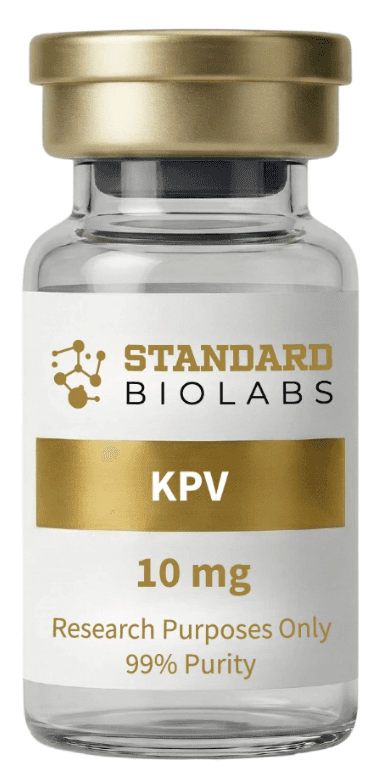
KPV
$
169 AUD
Product Info
KPV is a synthetic peptide derived from the N-terminal sequence of the alpha-melanocyte-stimulating hormone (α-MSH). It is commonly used in laboratory research to study anti-inflammatory effects, cellular signalling, and immune response modulation. KPV is of interest in controlled experimental settings exploring inflammatory pathways, cytokine regulation, and peptide–receptor interactions. This compound is supplied strictly for research purposes only and is not intended for human or veterinary use.
Buy 5 or more and save 10%
Categories
Bacteriostatic Water
AOD
Cagrilintide
Cagrilintide + Semaglutide
Retatrutide
Semaglutide
Tirzepatide
SLU PP 332
MOTS C
BPC 157
bpc-157-tb-500
Description
Overview
Biochemical Characteristics
Research Applications
Pathway / Mechanistic Context
Form & Analytical Testing
RUO Disclaimer


Overview
Biochemical Characteristics
Research Applications
Pathway / Mechanistic Context
Form & Analytical Testing
RUO Disclaimer
Overview
Melanotan 2 is a synthetic cyclic heptapeptide derived from alpha-melanocyte stimulating hormone (α-MSH), designed to activate melanocortin receptors and promote skin pigmentation. The peptide is a potent MC1R and MC4R agonist that induces melanin production and darkening of skin tone. Melanotan 2 is studied for its potential in supporting skin pigmentation, UV-independent tanning, and sexual function enhancement. Research indicates the peptide activates melanocortin signaling in melanocytes to stimulate melanin synthesis and in hypothalamic regions to enhance sexual arousal. Melanotan 2 represents a valuable research tool for investigating melanocortin signaling, pigmentation mechanisms, and sexual neurobiology pathways.
Overview
Melanotan 2 is a synthetic cyclic heptapeptide derived from alpha-melanocyte stimulating hormone (α-MSH), designed to activate melanocortin receptors and promote skin pigmentation. The peptide is a potent MC1R and MC4R agonist that induces melanin production and darkening of skin tone. Melanotan 2 is studied for its potential in supporting skin pigmentation, UV-independent tanning, and sexual function enhancement. Research indicates the peptide activates melanocortin signaling in melanocytes to stimulate melanin synthesis and in hypothalamic regions to enhance sexual arousal. Melanotan 2 represents a valuable research tool for investigating melanocortin signaling, pigmentation mechanisms, and sexual neurobiology pathways.
Biochemical Characteristics
Melanotan 2 is a 7-amino acid cyclic peptide with molecular weight of approximately 1,024 Da. The peptide contains a cyclized backbone structure and selective melanocortin receptor binding profile optimized for skin and sexual function effects. The peptide is water-soluble and demonstrates stability across physiological pH ranges (6.5–8.0). Melanotan 2 crosses the blood-brain barrier and distributes throughout central nervous system and peripheral tissues. The peptide shows extended biological half-life and resistance to enzymatic degradation. Cellular uptake occurs through melanocortin receptor binding and G-protein coupled receptor internalization. The peptide localizes to melanocytes in epidermis and hypothalamic brain regions regulating sexual function.
Biochemical Characteristics
Melanotan 2 is a 7-amino acid cyclic peptide with molecular weight of approximately 1,024 Da. The peptide contains a cyclized backbone structure and selective melanocortin receptor binding profile optimized for skin and sexual function effects. The peptide is water-soluble and demonstrates stability across physiological pH ranges (6.5–8.0). Melanotan 2 crosses the blood-brain barrier and distributes throughout central nervous system and peripheral tissues. The peptide shows extended biological half-life and resistance to enzymatic degradation. Cellular uptake occurs through melanocortin receptor binding and G-protein coupled receptor internalization. The peptide localizes to melanocytes in epidermis and hypothalamic brain regions regulating sexual function.
Research Applications
Melanin Synthesis & Pigmentation Investigation of melanotan 2-induced enhancement of melanin production and skin darkening. UV-Independent Tanning Assessment of skin pigmentation development without UV exposure through melanocyte stimulation. Sexual Function Enhancement Study of effects on sexual arousal, erectile function, and libido through melanocortin signaling. Photoprotection Research Investigation of potential protective effects of melanin against UV damage in dermatological models. Melanocortin Biology Examination of melanocortin receptor signaling and physiological effects of MC1R and MC4R activation. Skin Biology Study of melanocyte biology, melanin biochemistry, and pigmentation pathways. Neuroendocrine Function Investigation of melanocortin signaling in appetite, energy metabolism, and sexual function regulation.
Research Applications
Melanin Synthesis & Pigmentation Investigation of melanotan 2-induced enhancement of melanin production and skin darkening. UV-Independent Tanning Assessment of skin pigmentation development without UV exposure through melanocyte stimulation. Sexual Function Enhancement Study of effects on sexual arousal, erectile function, and libido through melanocortin signaling. Photoprotection Research Investigation of potential protective effects of melanin against UV damage in dermatological models. Melanocortin Biology Examination of melanocortin receptor signaling and physiological effects of MC1R and MC4R activation. Skin Biology Study of melanocyte biology, melanin biochemistry, and pigmentation pathways. Neuroendocrine Function Investigation of melanocortin signaling in appetite, energy metabolism, and sexual function regulation.
Pathway / Mechanistic Context
Melanocortin-1 Receptor Activation Melanotan 2 binds and activates melanocortin-1 receptors (MC1R) on melanocyte cell surface, triggering cAMP-dependent signaling cascades that enhance melanin synthesis and release. Melanin Biosynthesis MC1R activation promotes activation of tyrosinase enzyme and upregulation of melanin biosynthetic pathway genes, increasing conversion of tyrosine to melanin precursors and final melanin products. Melanin Transfer The peptide enhances transfer of melanosomes containing melanin from melanocytes to surrounding keratinocytes, distributing pigment throughout epidermis for darkening effect. Melanocortin-4 Receptor Effects Melanotan 2 additionally activates MC4R in hypothalamus, promoting sexual arousal and sexual function through neural pathways overlapping with sexual motivation circuits. Sustained Pigmentation The cyclic peptide structure and extended half-life support sustained melanin production with cumulative tanning effects over repeated dosing. Receptor Selectivity The peptide demonstrates selectivity for MC1R and MC4R while avoiding significant MC2R activation, targeting desired pigmentation and sexual effects while minimizing adrenal hormone effects.
Pathway / Mechanistic Context
Melanocortin-1 Receptor Activation Melanotan 2 binds and activates melanocortin-1 receptors (MC1R) on melanocyte cell surface, triggering cAMP-dependent signaling cascades that enhance melanin synthesis and release. Melanin Biosynthesis MC1R activation promotes activation of tyrosinase enzyme and upregulation of melanin biosynthetic pathway genes, increasing conversion of tyrosine to melanin precursors and final melanin products. Melanin Transfer The peptide enhances transfer of melanosomes containing melanin from melanocytes to surrounding keratinocytes, distributing pigment throughout epidermis for darkening effect. Melanocortin-4 Receptor Effects Melanotan 2 additionally activates MC4R in hypothalamus, promoting sexual arousal and sexual function through neural pathways overlapping with sexual motivation circuits. Sustained Pigmentation The cyclic peptide structure and extended half-life support sustained melanin production with cumulative tanning effects over repeated dosing. Receptor Selectivity The peptide demonstrates selectivity for MC1R and MC4R while avoiding significant MC2R activation, targeting desired pigmentation and sexual effects while minimizing adrenal hormone effects.
Preclinical Research Summary
Melanotan 2 is supplied as sterile aqueous solution or lyophilized powder at concentrations of 1–10 mg/mL. Storage at 2–8°C; shelf-life 12–24 months for solutions, 24–36 months for lyophilized material. Analytical testing includes HPLC purity verification (≥95%), HPLC-MS molecular confirmation with cyclic structure verification, amino acid analysis, and microbial sterility/endotoxin testing. Certificate of Analysis provided with each lot.
Preclinical Research Summary
Melanotan 2 is supplied as sterile aqueous solution or lyophilized powder at concentrations of 1–10 mg/mL. Storage at 2–8°C; shelf-life 12–24 months for solutions, 24–36 months for lyophilized material. Analytical testing includes HPLC purity verification (≥95%), HPLC-MS molecular confirmation with cyclic structure verification, amino acid analysis, and microbial sterility/endotoxin testing. Certificate of Analysis provided with each lot.
RUO Disclaimer
RESEARCH USE ONLY (RUO) This product is intended exclusively for laboratory research and is not approved for clinical use or human/animal administration. Not manufactured for pharmaceutical use. Users assume responsibility for suitability determination, proper storage, safety compliance, and regulatory adherence. Institutional approval (IACUC, IRB) may be required. Information provided is for research reference only and does not constitute medical advice or therapeutic claims.
RUO Disclaimer
RESEARCH USE ONLY (RUO) This product is intended exclusively for laboratory research and is not approved for clinical use or human/animal administration. Not manufactured for pharmaceutical use. Users assume responsibility for suitability determination, proper storage, safety compliance, and regulatory adherence. Institutional approval (IACUC, IRB) may be required. Information provided is for research reference only and does not constitute medical advice or therapeutic claims.

We are committed to supporting all research customers with consistent standards and professional care.

Subscribe
Subscribe to stay updated at every moment about all our news and product drops.
Terms of Service
Refund Policy
Privacy Policy
Promotional Terms

© Standard BioLabs. All rights reserved.
All products on this site are designated for Research Use Only and are supplied solely for laboratory, analytical, or scientific research purposes by qualified professionals. Products are not intended for human or animal use, and no diagnostic, therapeutic, or clinical use is intended or implied.
Standard BioLabs is a chemical supplier. Standard BioLabs is not a compounding pharmacy or chemical compounding facility as defined under 503A of the Federal Food, Drug, and Cosmetic Act. Standard BioLabs is not an outsourcing facility as defined under 503B of the Federal Food, Drug, and Cosmetic Act.
We are committed to supporting all research customers with consistent standards and professional care.
Subscribe
Subscribe to stay updated at every moment about all our news and product drops.
Terms of Service
Refund Policy
Privacy Policy
Promotional Terms
© Standard BioLabs. All rights reserved.
All products on this site are designated for Research Use Only and are supplied solely for laboratory, analytical, or scientific research purposes by qualified professionals. Products are not intended for human or animal use, and no diagnostic, therapeutic, or clinical use is intended or implied.
Standard BioLabs is a chemical supplier. Standard BioLabs is not a compounding pharmacy or chemical compounding facility as defined under 503A of the Federal Food, Drug, and Cosmetic Act. Standard BioLabs is not an outsourcing facility as defined under 503B of the Federal Food, Drug, and Cosmetic Act.
We are committed to supporting all research customers with consistent standards and professional care.
Subscribe
Subscribe to stay updated at every moment about all our news and product drops.
Terms of Service
Refund Policy
Privacy Policy
Promotional Terms
All products on this site are designated for Research Use Only and are supplied solely for laboratory, analytical, or scientific research purposes by qualified professionals. Products are not intended for human or animal use, and no diagnostic, therapeutic, or clinical use is intended or implied.
Standard BioLabs is a chemical supplier. Standard BioLabs is not a compounding pharmacy or chemical compounding facility as defined under 503A of the Federal Food, Drug, and Cosmetic Act. Standard BioLabs is not an outsourcing facility as defined under 503B of the Federal Food, Drug, and Cosmetic Act.
© Standard BioLabs. All rights reserved.