
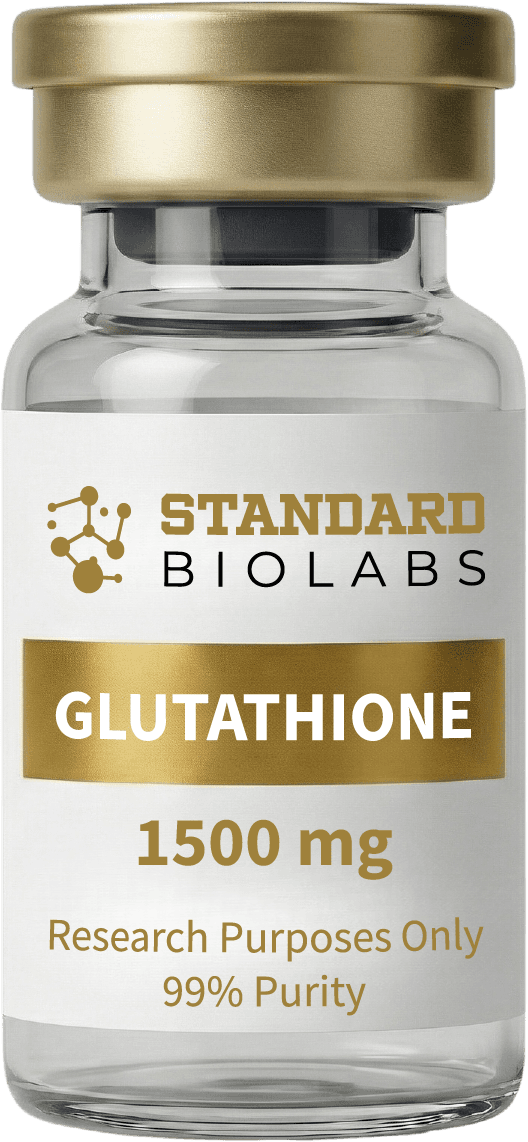
GLUTATHIONE
$
119 AUD
Product Info
Glutathione is a tripeptide antioxidant compound commonly used in laboratory research to study oxidative stress, cellular detoxification mechanisms, and redox homeostasis. It is of interest in controlled experimental settings examining antioxidant defense systems, xenobiotic metabolism, and thiol-dependent enzymatic reactions in cellular models. Glutathione is supplied strictly for research purposes only and is not intended for human or veterinary use.
Buy 3 and save 15%
Buy 5 and save 20%
Categories
Bacteriostatic Water
AOD
Cagrilintide
Cagrilintide + Semaglutide
Retatrutide
Semaglutide
Tirzepatide
SLU PP 332
MOTS C
BPC 157
bpc-157-tb-500
Description
Overview
Biochemical Characteristics
Research Applications
Pathway / Mechanistic Context
Form & Analytical Testing
RUO Disclaimer


Overview
Biochemical Characteristics
Research Applications
Pathway / Mechanistic Context
Form & Analytical Testing
RUO Disclaimer
Overview
Glutathione is a naturally occurring tripeptide composed of three amino acids: glutamic acid, cysteine, and glycine (γ-L-glutamyl-L-cysteinyl-glycine). With a molecular weight of 307 Da, glutathione exists in cells primarily in two forms: the reduced form (GSH) and the oxidized form (GSSG, a disulfide-linked dimer). As the most abundant non-protein thiol compound in cells, glutathione functions as the master antioxidant and cellular detoxification agent across virtually all tissues, with particular importance in the nervous system, liver, and immune cells. Glutathione serves as the primary substrate for glutathione peroxidase enzymes and participates directly in the neutralization of reactive oxygen species (ROS), reactive nitrogen species (RNS), and xenobiotic compounds. In research applications, glutathione has become essential for investigating oxidative stress mechanisms, cellular aging, neurodegenerative disease pathogenesis, and mitochondrial dysfunction. Its role as a critical redox regulator makes it invaluable for studying age-related pathologies, metabolic disorders, and conditions characterized by impaired antioxidant capacity.
Overview
Glutathione is a naturally occurring tripeptide composed of three amino acids: glutamic acid, cysteine, and glycine (γ-L-glutamyl-L-cysteinyl-glycine). With a molecular weight of 307 Da, glutathione exists in cells primarily in two forms: the reduced form (GSH) and the oxidized form (GSSG, a disulfide-linked dimer). As the most abundant non-protein thiol compound in cells, glutathione functions as the master antioxidant and cellular detoxification agent across virtually all tissues, with particular importance in the nervous system, liver, and immune cells. Glutathione serves as the primary substrate for glutathione peroxidase enzymes and participates directly in the neutralization of reactive oxygen species (ROS), reactive nitrogen species (RNS), and xenobiotic compounds. In research applications, glutathione has become essential for investigating oxidative stress mechanisms, cellular aging, neurodegenerative disease pathogenesis, and mitochondrial dysfunction. Its role as a critical redox regulator makes it invaluable for studying age-related pathologies, metabolic disorders, and conditions characterized by impaired antioxidant capacity.
Biochemical Characteristics
Glutathione possesses several distinctive biochemical properties that establish its unique biological role: Molecular formula: C₁₀H₁₇N₃O₆S (reduced form); MW: 307.32 g/mol Structure: γ-peptide linkage between glutamic acid and cysteine (via γ-carboxyl group rather than α-carboxyl), with glycine at the C-terminus Redox chemistry: Contains a highly reactive thiol (-SH) group on the cysteine residue that participates in oxidation-reduction reactions, forming reversible disulfide bonds with other glutathione molecules Cellular concentration: Typically present at 1–10 mM intracellular concentration, vastly exceeding most other cellular metabolites pH stability: Stable across physiological pH ranges (6.5–8.0) but susceptible to oxidation in alkaline conditions Chelation capacity: Binds heavy metals (cadmium, lead, mercury) and serves as a substrate for glutathione S-transferases in phase II detoxification Intracellular distribution: Primarily localized in the cytoplasm, with significant pools in mitochondria, nucleus, and endoplasmic reticulum Biosynthesis: Synthesized endogenously via two enzymatic steps: glutamyl-cysteine synthetase and glutathione synthetase, with availability of cysteine and glutamic acid as rate-limiting factors Bioavailability: Free tripeptide exhibits limited oral bioavailability due to enzymatic degradation; research often employs N-acetyl-L-cysteine or other delivery strategies to enhance cellular uptake
Biochemical Characteristics
Glutathione possesses several distinctive biochemical properties that establish its unique biological role: Molecular formula: C₁₀H₁₇N₃O₆S (reduced form); MW: 307.32 g/mol Structure: γ-peptide linkage between glutamic acid and cysteine (via γ-carboxyl group rather than α-carboxyl), with glycine at the C-terminus Redox chemistry: Contains a highly reactive thiol (-SH) group on the cysteine residue that participates in oxidation-reduction reactions, forming reversible disulfide bonds with other glutathione molecules Cellular concentration: Typically present at 1–10 mM intracellular concentration, vastly exceeding most other cellular metabolites pH stability: Stable across physiological pH ranges (6.5–8.0) but susceptible to oxidation in alkaline conditions Chelation capacity: Binds heavy metals (cadmium, lead, mercury) and serves as a substrate for glutathione S-transferases in phase II detoxification Intracellular distribution: Primarily localized in the cytoplasm, with significant pools in mitochondria, nucleus, and endoplasmic reticulum Biosynthesis: Synthesized endogenously via two enzymatic steps: glutamyl-cysteine synthetase and glutathione synthetase, with availability of cysteine and glutamic acid as rate-limiting factors Bioavailability: Free tripeptide exhibits limited oral bioavailability due to enzymatic degradation; research often employs N-acetyl-L-cysteine or other delivery strategies to enhance cellular uptake
Research Applications
Glutathione is extensively utilized across multiple research domains investigating oxidative stress, cellular aging, and disease mechanisms: Oxidative Stress & ROS Scavenging Direct measurement and modulation of cellular redox state and oxidative stress burden Investigation of reactive oxygen species (ROS) and reactive nitrogen species (RNS) dynamics in disease models Assessment of antioxidant defense system capacity and glutathione-dependent enzyme activity Study of cellular responses to oxidative insults and redox-sensitive signaling pathways Neurodegenerative Disease Models Examination of glutathione depletion in Parkinson's disease, Alzheimer's disease, and other neurodegenerative conditions Investigation of mitochondrial oxidative stress and neuronal cell death mechanisms Assessment of neuroprotection through glutathione augmentation strategies Study of age-related cognitive decline and neuroinflammation Aging & Longevity Research Analysis of age-related decline in glutathione synthesis and regeneration capacity Investigation of cellular senescence and senescent-associated secretory phenotype (SASP) modulation through redox regulation Exploration of glutathione's role in healthspan and lifespan extension Study of age-related mitochondrial dysfunction and metabolic decline Metabolic & Endocrine Disorders Investigation of oxidative stress in diabetes, obesity, and metabolic syndrome Assessment of glutathione's role in insulin signaling and glucose homeostasis Study of hepatic detoxification capacity and drug metabolism Examination of lipid peroxidation and atherosclerosis mechanisms Immune Function & Inflammation Modulation of T-cell and B-cell function through redox regulation Investigation of chronic low-grade inflammation ("inflammaging") and glutathione depletion Assessment of immune competence and pathogen defense mechanisms Study of innate immune signaling and pattern recognition receptor activation Mitochondrial Biology Evaluation of mitochondrial oxidative stress and energy production Investigation of mitochondrial dysfunction in aging and disease Assessment of mitochondrial-targeted antioxidant strategies Study of mitochondrial autophagy (mitophagy) and quality control mechanisms Drug Metabolism & Toxicology Characterization of phase II xenobiotic detoxification pathways Assessment of drug-induced oxidative stress and hepatotoxicity Investigation of environmental toxin metabolism and elimination Study of individual variation in detoxification capacity Cancer Biology & Prevention Investigation of oxidative stress in tumorigenesis and tumor progression Assessment of cancer cell vulnerability to pro-oxidant strategies Study of chemotherapy-induced oxidative damage and protective mechanisms Examination of glutathione's role in chemotherapy resistance
Research Applications
Glutathione is extensively utilized across multiple research domains investigating oxidative stress, cellular aging, and disease mechanisms: Oxidative Stress & ROS Scavenging Direct measurement and modulation of cellular redox state and oxidative stress burden Investigation of reactive oxygen species (ROS) and reactive nitrogen species (RNS) dynamics in disease models Assessment of antioxidant defense system capacity and glutathione-dependent enzyme activity Study of cellular responses to oxidative insults and redox-sensitive signaling pathways Neurodegenerative Disease Models Examination of glutathione depletion in Parkinson's disease, Alzheimer's disease, and other neurodegenerative conditions Investigation of mitochondrial oxidative stress and neuronal cell death mechanisms Assessment of neuroprotection through glutathione augmentation strategies Study of age-related cognitive decline and neuroinflammation Aging & Longevity Research Analysis of age-related decline in glutathione synthesis and regeneration capacity Investigation of cellular senescence and senescent-associated secretory phenotype (SASP) modulation through redox regulation Exploration of glutathione's role in healthspan and lifespan extension Study of age-related mitochondrial dysfunction and metabolic decline Metabolic & Endocrine Disorders Investigation of oxidative stress in diabetes, obesity, and metabolic syndrome Assessment of glutathione's role in insulin signaling and glucose homeostasis Study of hepatic detoxification capacity and drug metabolism Examination of lipid peroxidation and atherosclerosis mechanisms Immune Function & Inflammation Modulation of T-cell and B-cell function through redox regulation Investigation of chronic low-grade inflammation ("inflammaging") and glutathione depletion Assessment of immune competence and pathogen defense mechanisms Study of innate immune signaling and pattern recognition receptor activation Mitochondrial Biology Evaluation of mitochondrial oxidative stress and energy production Investigation of mitochondrial dysfunction in aging and disease Assessment of mitochondrial-targeted antioxidant strategies Study of mitochondrial autophagy (mitophagy) and quality control mechanisms Drug Metabolism & Toxicology Characterization of phase II xenobiotic detoxification pathways Assessment of drug-induced oxidative stress and hepatotoxicity Investigation of environmental toxin metabolism and elimination Study of individual variation in detoxification capacity Cancer Biology & Prevention Investigation of oxidative stress in tumorigenesis and tumor progression Assessment of cancer cell vulnerability to pro-oxidant strategies Study of chemotherapy-induced oxidative damage and protective mechanisms Examination of glutathione's role in chemotherapy resistance
Pathway / Mechanistic Context
Glutathione operates through interconnected biochemical pathways that establish its central role in cellular antioxidant defense and redox regulation: Primary Antioxidant Defense: The Glutathione Peroxidase SystemGlutathione serves as the essential electron donor for glutathione peroxidase (GPx) enzymes, which catalyze the reduction of hydrogen peroxide (H₂O₂) and organic hydroperoxides to water and alcohols. This reaction converts the reduced form (GSH) to the oxidized disulfide form (GSSG). Glutathione reductase (GR) subsequently regenerates GSH from GSSG using NADPH as the electron source, establishing a continuous redox cycle. This GPx/GR system provides the primary cellular defense against ROS-mediated damage. Redox-Sensitive Signaling & Gene ExpressionGlutathione's redox state (GSH/GSSG ratio) functions as a critical intracellular redox signal that regulates the activity of cysteine-containing transcription factors, protein kinases, and phosphatases. Nuclear factor kappa-light-chain-enhancer of activated B cells (NF-κB), activator protein-1 (AP-1), and p53 are among key redox-sensitive transcription factors whose DNA-binding activity depends on the cellular redox environment. By maintaining reducing conditions, glutathione enables proper expression of antioxidant genes, stress response genes, and genes regulating cellular differentiation and survival. Phase II Detoxification & Xenobiotic MetabolismGlutathione S-transferases (GSTs) catalyze the conjugation of glutathione with electrophilic xenobiotics, endogenous metabolites, and environmental toxins, facilitating their elimination. This conjugation dramatically increases hydrophilicity and enhances urinary or biliary excretion, constituting the primary mechanism for protecting cells from toxic insult. Glutathione's nucleophilic thiol group directly attacks electrophilic compounds, preventing their interaction with critical cellular macromolecules. Heavy Metal Chelation & DetoxificationGlutathione forms stable complexes with toxic heavy metals including cadmium, lead, and mercury, sequestering them for elimination. This metallothionein-independent detoxification pathway represents an important defense mechanism against metal accumulation and toxicity, particularly relevant for neurons and hepatocytes chronically exposed to environmental metals. Mitochondrial Protection & BioenergeticsGlutathione maintains mitochondrial membrane integrity, protects cardiolipin and other essential phospholipids from oxidative damage, and preserves the structural organization of the electron transport chain. By scavenging ROS generated during oxidative phosphorylation, glutathione enables efficient ATP production while preventing mitochondrial DNA damage and activation of apoptotic pathways. Depletion of mitochondrial glutathione is a critical trigger for mitochondrial dysfunction and cellular death. Protein Thiol Regulation & Post-Translational ModificationGlutathione participates in S-glutathionylation (S-nitrosylation), a reversible post-translational modification in which glutathione binds to cysteine residues on target proteins. This glutathionylation regulates protein activity, localization, and stability, serving as a redox-sensitive switch for controlling enzyme function and signal transduction. Examples include modulation of glyceraldehyde-3-phosphate dehydrogenase (GAPDH), actin polymerization, and calcium handling proteins. Immune Cell Differentiation & FunctionThe intracellular redox environment, governed substantially by glutathione levels, critically determines Th1 versus Th2 differentiation in T cells and influences B cell antibody production. Optimal glutathione levels are required for naive T cell proliferation and effector function, while glutathione depletion skews immune responses toward Th2 dominance and impaired cellular immunity. This redox regulation represents a fundamental mechanism linking oxidative stress to immunosenescence. Apoptosis Regulation & Cell Survival SignalingGlutathione depletion disrupts the balance between pro- and anti-apoptotic signaling, favoring activation of apoptotic cascades through mitochondrial dysfunction, cytochrome c release, and caspase activation. Conversely, maintenance of glutathione levels preserves expression of anti-apoptotic proteins (Bcl-2, Bcl-xL) and suppresses pro-apoptotic signals (Bax, Bad), establishing glutathione as a critical guardian of cellular survival.
Pathway / Mechanistic Context
Glutathione operates through interconnected biochemical pathways that establish its central role in cellular antioxidant defense and redox regulation: Primary Antioxidant Defense: The Glutathione Peroxidase SystemGlutathione serves as the essential electron donor for glutathione peroxidase (GPx) enzymes, which catalyze the reduction of hydrogen peroxide (H₂O₂) and organic hydroperoxides to water and alcohols. This reaction converts the reduced form (GSH) to the oxidized disulfide form (GSSG). Glutathione reductase (GR) subsequently regenerates GSH from GSSG using NADPH as the electron source, establishing a continuous redox cycle. This GPx/GR system provides the primary cellular defense against ROS-mediated damage. Redox-Sensitive Signaling & Gene ExpressionGlutathione's redox state (GSH/GSSG ratio) functions as a critical intracellular redox signal that regulates the activity of cysteine-containing transcription factors, protein kinases, and phosphatases. Nuclear factor kappa-light-chain-enhancer of activated B cells (NF-κB), activator protein-1 (AP-1), and p53 are among key redox-sensitive transcription factors whose DNA-binding activity depends on the cellular redox environment. By maintaining reducing conditions, glutathione enables proper expression of antioxidant genes, stress response genes, and genes regulating cellular differentiation and survival. Phase II Detoxification & Xenobiotic MetabolismGlutathione S-transferases (GSTs) catalyze the conjugation of glutathione with electrophilic xenobiotics, endogenous metabolites, and environmental toxins, facilitating their elimination. This conjugation dramatically increases hydrophilicity and enhances urinary or biliary excretion, constituting the primary mechanism for protecting cells from toxic insult. Glutathione's nucleophilic thiol group directly attacks electrophilic compounds, preventing their interaction with critical cellular macromolecules. Heavy Metal Chelation & DetoxificationGlutathione forms stable complexes with toxic heavy metals including cadmium, lead, and mercury, sequestering them for elimination. This metallothionein-independent detoxification pathway represents an important defense mechanism against metal accumulation and toxicity, particularly relevant for neurons and hepatocytes chronically exposed to environmental metals. Mitochondrial Protection & BioenergeticsGlutathione maintains mitochondrial membrane integrity, protects cardiolipin and other essential phospholipids from oxidative damage, and preserves the structural organization of the electron transport chain. By scavenging ROS generated during oxidative phosphorylation, glutathione enables efficient ATP production while preventing mitochondrial DNA damage and activation of apoptotic pathways. Depletion of mitochondrial glutathione is a critical trigger for mitochondrial dysfunction and cellular death. Protein Thiol Regulation & Post-Translational ModificationGlutathione participates in S-glutathionylation (S-nitrosylation), a reversible post-translational modification in which glutathione binds to cysteine residues on target proteins. This glutathionylation regulates protein activity, localization, and stability, serving as a redox-sensitive switch for controlling enzyme function and signal transduction. Examples include modulation of glyceraldehyde-3-phosphate dehydrogenase (GAPDH), actin polymerization, and calcium handling proteins. Immune Cell Differentiation & FunctionThe intracellular redox environment, governed substantially by glutathione levels, critically determines Th1 versus Th2 differentiation in T cells and influences B cell antibody production. Optimal glutathione levels are required for naive T cell proliferation and effector function, while glutathione depletion skews immune responses toward Th2 dominance and impaired cellular immunity. This redox regulation represents a fundamental mechanism linking oxidative stress to immunosenescence. Apoptosis Regulation & Cell Survival SignalingGlutathione depletion disrupts the balance between pro- and anti-apoptotic signaling, favoring activation of apoptotic cascades through mitochondrial dysfunction, cytochrome c release, and caspase activation. Conversely, maintenance of glutathione levels preserves expression of anti-apoptotic proteins (Bcl-2, Bcl-xL) and suppresses pro-apoptotic signals (Bax, Bad), establishing glutathione as a critical guardian of cellular survival.
Preclinical Research Summary
Glutathione is supplied in multiple forms for diverse research applications, with pharmaceutical-grade preparations available as: Physical Forms Reduced glutathione (GSH): White to off-white crystalline powder with characteristic mild odor Oxidized glutathione (GSSG): White crystalline powder Solution preparations: Sterile aqueous solutions at concentrations ranging from 1–50 mg/mL in phosphate buffered saline or alternative vehicles Storage & Stability Optimal storage: 2–8°C in dark, oxygen-free conditions to prevent oxidation Shelf-life: Typically 24–36 months for powder; 12–24 months for aqueous solutions Stability enhanced with inert gas headspace (nitrogen or argon) to minimize oxidation during storage Analytical Characterization & Quality Control HPLC analysis: Determination of reduced (GSH) and oxidized (GSSG) forms with quantification of purity (typically ≥98%) High-performance liquid chromatography-mass spectrometry (HPLC-MS): Confirmation of molecular ion (m/z 308 for reduced form) and structural integrity Amino acid analysis: Quantitative verification of glutamic acid, cysteine, and glycine composition via acid hydrolysis and post-column derivatization Elemental analysis: Verification of empirical formula (C₁₀H₁₇N₃O₆S) through carbon, hydrogen, nitrogen, and sulfur quantification Moisture content: Karl Fischer titration determining water content (typically <5% for lyophilized material) Microbial sterility: Compliance with USP/EP sterility requirements for injectable-grade preparations Endotoxin testing: LAL assay confirming pyrogenicity standards (<1 EU/mg) Thiol group quantification: Ellman's reagent assay measuring free -SH groups to confirm chemical integrity Stability testing: Accelerated degradation studies under specified temperature and humidity conditions Certificate of Analysis: Complete documentation of all analytical parameters with lot-specific data
Preclinical Research Summary
Glutathione is supplied in multiple forms for diverse research applications, with pharmaceutical-grade preparations available as: Physical Forms Reduced glutathione (GSH): White to off-white crystalline powder with characteristic mild odor Oxidized glutathione (GSSG): White crystalline powder Solution preparations: Sterile aqueous solutions at concentrations ranging from 1–50 mg/mL in phosphate buffered saline or alternative vehicles Storage & Stability Optimal storage: 2–8°C in dark, oxygen-free conditions to prevent oxidation Shelf-life: Typically 24–36 months for powder; 12–24 months for aqueous solutions Stability enhanced with inert gas headspace (nitrogen or argon) to minimize oxidation during storage Analytical Characterization & Quality Control HPLC analysis: Determination of reduced (GSH) and oxidized (GSSG) forms with quantification of purity (typically ≥98%) High-performance liquid chromatography-mass spectrometry (HPLC-MS): Confirmation of molecular ion (m/z 308 for reduced form) and structural integrity Amino acid analysis: Quantitative verification of glutamic acid, cysteine, and glycine composition via acid hydrolysis and post-column derivatization Elemental analysis: Verification of empirical formula (C₁₀H₁₇N₃O₆S) through carbon, hydrogen, nitrogen, and sulfur quantification Moisture content: Karl Fischer titration determining water content (typically <5% for lyophilized material) Microbial sterility: Compliance with USP/EP sterility requirements for injectable-grade preparations Endotoxin testing: LAL assay confirming pyrogenicity standards (<1 EU/mg) Thiol group quantification: Ellman's reagent assay measuring free -SH groups to confirm chemical integrity Stability testing: Accelerated degradation studies under specified temperature and humidity conditions Certificate of Analysis: Complete documentation of all analytical parameters with lot-specific data
RUO Disclaimer
RESEARCH USE ONLY (RUO) This product is intended exclusively for laboratory research purposes and is not approved for clinical use, therapeutic application, diagnostic procedures, or human/animal administration outside of approved research protocols. Glutathione is provided for in vitro and in vivo research applications in qualified research facilities operating under appropriate institutional and regulatory oversight. This product is not manufactured, processed, tested, or validated for pharmaceutical, therapeutic, veterinary, or clinical use. The manufacturer and supplier make no claims regarding efficacy, safety, or suitability for any purpose other than research investigation. Users assume full responsibility for: Determining suitability of this product for their specific research applications and experimental design Proper handling, storage, and transport in accordance with applicable regulations and safety guidelines Compliance with all institutional biosafety protocols, chemical safety procedures, and research guidelines Compliance with local, state, and national regulations governing peptide and biochemical research Appropriate institutional review and approval (IACUC, IRB, chemical safety committee) where applicable Understanding the chemical and biological properties of this product and potential hazards The information provided herein is for research reference only and does not constitute medical advice, therapeutic claims, or evidence of clinical efficacy. Researchers must maintain current knowledge of scientific literature and regulatory requirements governing biochemical research in their jurisdiction.
RUO Disclaimer
RESEARCH USE ONLY (RUO) This product is intended exclusively for laboratory research purposes and is not approved for clinical use, therapeutic application, diagnostic procedures, or human/animal administration outside of approved research protocols. Glutathione is provided for in vitro and in vivo research applications in qualified research facilities operating under appropriate institutional and regulatory oversight. This product is not manufactured, processed, tested, or validated for pharmaceutical, therapeutic, veterinary, or clinical use. The manufacturer and supplier make no claims regarding efficacy, safety, or suitability for any purpose other than research investigation. Users assume full responsibility for: Determining suitability of this product for their specific research applications and experimental design Proper handling, storage, and transport in accordance with applicable regulations and safety guidelines Compliance with all institutional biosafety protocols, chemical safety procedures, and research guidelines Compliance with local, state, and national regulations governing peptide and biochemical research Appropriate institutional review and approval (IACUC, IRB, chemical safety committee) where applicable Understanding the chemical and biological properties of this product and potential hazards The information provided herein is for research reference only and does not constitute medical advice, therapeutic claims, or evidence of clinical efficacy. Researchers must maintain current knowledge of scientific literature and regulatory requirements governing biochemical research in their jurisdiction.

We are committed to supporting all research customers with consistent standards and professional care.

Subscribe
Subscribe to stay updated at every moment about all our news and product drops.
Terms of Service
Refund Policy
Privacy Policy
Promotional Terms

© Standard BioLabs. All rights reserved.
All products on this site are designated for Research Use Only and are supplied solely for laboratory, analytical, or scientific research purposes by qualified professionals. Products are not intended for human or animal use, and no diagnostic, therapeutic, or clinical use is intended or implied.
Standard BioLabs is a chemical supplier. Standard BioLabs is not a compounding pharmacy or chemical compounding facility as defined under 503A of the Federal Food, Drug, and Cosmetic Act. Standard BioLabs is not an outsourcing facility as defined under 503B of the Federal Food, Drug, and Cosmetic Act.
We are committed to supporting all research customers with consistent standards and professional care.
Subscribe
Subscribe to stay updated at every moment about all our news and product drops.
Terms of Service
Refund Policy
Privacy Policy
Promotional Terms
© Standard BioLabs. All rights reserved.
All products on this site are designated for Research Use Only and are supplied solely for laboratory, analytical, or scientific research purposes by qualified professionals. Products are not intended for human or animal use, and no diagnostic, therapeutic, or clinical use is intended or implied.
Standard BioLabs is a chemical supplier. Standard BioLabs is not a compounding pharmacy or chemical compounding facility as defined under 503A of the Federal Food, Drug, and Cosmetic Act. Standard BioLabs is not an outsourcing facility as defined under 503B of the Federal Food, Drug, and Cosmetic Act.
We are committed to supporting all research customers with consistent standards and professional care.
Subscribe
Subscribe to stay updated at every moment about all our news and product drops.
Terms of Service
Refund Policy
Privacy Policy
Promotional Terms
All products on this site are designated for Research Use Only and are supplied solely for laboratory, analytical, or scientific research purposes by qualified professionals. Products are not intended for human or animal use, and no diagnostic, therapeutic, or clinical use is intended or implied.
Standard BioLabs is a chemical supplier. Standard BioLabs is not a compounding pharmacy or chemical compounding facility as defined under 503A of the Federal Food, Drug, and Cosmetic Act. Standard BioLabs is not an outsourcing facility as defined under 503B of the Federal Food, Drug, and Cosmetic Act.
© Standard BioLabs. All rights reserved.