
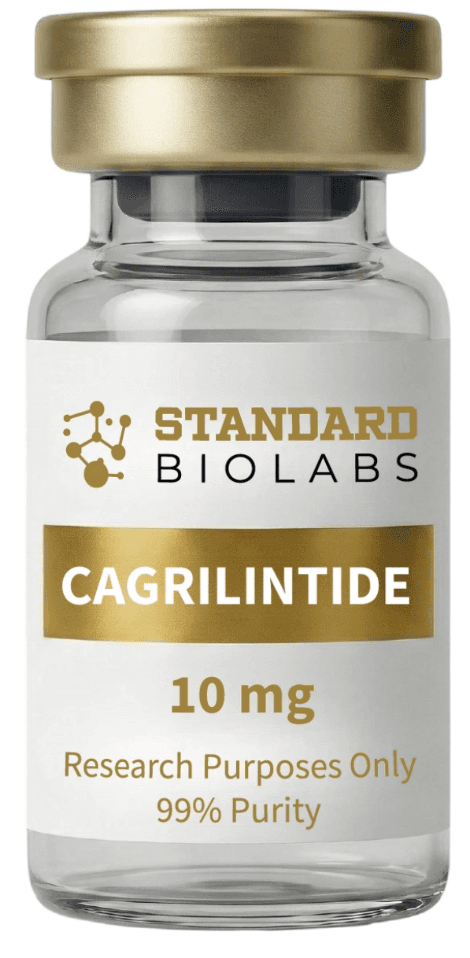
CAGRILINTIDE
$
149 AUD
Product Info
Cagrilintide is a synthetic peptide research compound studied for its activity on amylin receptors, commonly used in laboratory research to investigate metabolic regulation, appetite signalling, and glucose homeostasis. It is of interest in controlled experimental settings exploring endocrine pathways, peptide–receptor interactions, and energy balance mechanisms. Cagrilintide is supplied strictly for research purposes only and is not intended for human or veterinary use.
Buy 5 or more and save 10%
Categories
Bacteriostatic Water
AOD
Cagrilintide
Cagrilintide + Semaglutide
Retatrutide
Semaglutide
Tirzepatide
SLU PP 332
MOTS C
BPC 157
bpc-157-tb-500
Description
Overview
Biochemical Characteristics
Research Applications
Pathway / Mechanistic Context
Form & Analytical Testing
RUO Disclaimer


Overview
Biochemical Characteristics
Research Applications
Pathway / Mechanistic Context
Form & Analytical Testing
RUO Disclaimer
Overview
Cagrilintide is a synthetic amylin receptor agonist—a 37-amino acid peptide analog of human amylin (islet amyloid polypeptide) with enhanced receptor selectivity and extended half-life. The peptide is designed to mimic natural amylin signaling and regulate glucose homeostasis and appetite. Cagrilintide is extensively studied for its potential in supporting glucose control, body weight management, and metabolic health. Research indicates the peptide slows gastric emptying, promotes satiety, enhances glucose-dependent insulin secretion, and reduces glucagon release through amylin receptor activation in pancreatic and gastrointestinal tissues. Cagrilintide represents a valuable research tool for investigating amylin physiology, appetite regulation, and therapeutic approaches to type 2 diabetes and obesity.
Overview
Cagrilintide is a synthetic amylin receptor agonist—a 37-amino acid peptide analog of human amylin (islet amyloid polypeptide) with enhanced receptor selectivity and extended half-life. The peptide is designed to mimic natural amylin signaling and regulate glucose homeostasis and appetite. Cagrilintide is extensively studied for its potential in supporting glucose control, body weight management, and metabolic health. Research indicates the peptide slows gastric emptying, promotes satiety, enhances glucose-dependent insulin secretion, and reduces glucagon release through amylin receptor activation in pancreatic and gastrointestinal tissues. Cagrilintide represents a valuable research tool for investigating amylin physiology, appetite regulation, and therapeutic approaches to type 2 diabetes and obesity.
Biochemical Characteristics
Cagrilintide is a 37-amino acid peptide with molecular weight of approximately 4,100 Da. The peptide is an amylin analog modified with fatty acid acylation enabling albumin binding and extended serum half-life compared to native amylin. The peptide is water-soluble and demonstrates excellent stability across physiological pH ranges (6.5–8.0). The albumin-binding modification reduces renal clearance and provides sustained biological activity for extended periods. Cagrilintide resists enzymatic degradation and maintains active drug concentrations in circulation. Cellular uptake occurs through amylin receptor binding and internalization. The peptide localizes to pancreatic islet cells, gastrointestinal epithelium, and central nervous system regions involved in appetite and glucose regulation.
Biochemical Characteristics
Cagrilintide is a 37-amino acid peptide with molecular weight of approximately 4,100 Da. The peptide is an amylin analog modified with fatty acid acylation enabling albumin binding and extended serum half-life compared to native amylin. The peptide is water-soluble and demonstrates excellent stability across physiological pH ranges (6.5–8.0). The albumin-binding modification reduces renal clearance and provides sustained biological activity for extended periods. Cagrilintide resists enzymatic degradation and maintains active drug concentrations in circulation. Cellular uptake occurs through amylin receptor binding and internalization. The peptide localizes to pancreatic islet cells, gastrointestinal epithelium, and central nervous system regions involved in appetite and glucose regulation.
Research Applications
Gastric Emptying Regulation Investigation of cagrilintide-induced slowing of gastric motility and nutrient absorption. Satiety & Appetite Suppression Assessment of enhanced satiety signals and reduced food intake through amylin receptor activation. Body Weight Management Study of body weight reduction through combined appetite suppression and metabolic effects. Glucose Homeostasis Investigation of enhancement of glucose-dependent insulin secretion and post-meal glucose control. Type 2 Diabetes Models Assessment of glycemic control improvement and metabolic function in diabetes research. Glucagon Suppression Study of reduction in glucagon release and hepatic glucose production through amylin signaling. Beta Cell Function Investigation of preservation of pancreatic beta cell mass and insulin secretory capacity.
Research Applications
Gastric Emptying Regulation Investigation of cagrilintide-induced slowing of gastric motility and nutrient absorption. Satiety & Appetite Suppression Assessment of enhanced satiety signals and reduced food intake through amylin receptor activation. Body Weight Management Study of body weight reduction through combined appetite suppression and metabolic effects. Glucose Homeostasis Investigation of enhancement of glucose-dependent insulin secretion and post-meal glucose control. Type 2 Diabetes Models Assessment of glycemic control improvement and metabolic function in diabetes research. Glucagon Suppression Study of reduction in glucagon release and hepatic glucose production through amylin signaling. Beta Cell Function Investigation of preservation of pancreatic beta cell mass and insulin secretory capacity.
Pathway / Mechanistic Context
Amylin Receptor Activation Cagrilintide binds and activates amylin receptors (calcitonin receptor with receptor activity-modifying protein 1) on pancreatic beta cells and gastrointestinal vagal afferents, triggering cAMP-dependent signaling cascades. Gastric Motility Slowing The peptide activates amylin receptors on vagal afferent neurons in the gastrointestinal tract, sending satiety signals to the hypothalamus and slowing gastric emptying rate. Insulin Secretion Enhancement Cagrilintide enhances glucose-dependent insulin secretion from beta cells through amylin receptor-mediated cAMP enhancement and calcium mobilization. Glucagon Suppression The peptide suppresses glucagon secretion from alpha cells through both direct amylin receptor signaling and indirect effects of amylin-induced insulin secretion. Central Appetite Suppression Cagrilintide crosses the blood-brain barrier and activates amylin receptors in the hypothalamus and area postrema, directly suppressing appetite and enhancing satiety signals. Nutrient-Dependent Metabolic Adjustment The peptide enables rapid adjustment of insulin and glucagon secretion in response to nutrient absorption patterns, improving post-meal glucose dynamics.
Pathway / Mechanistic Context
Amylin Receptor Activation Cagrilintide binds and activates amylin receptors (calcitonin receptor with receptor activity-modifying protein 1) on pancreatic beta cells and gastrointestinal vagal afferents, triggering cAMP-dependent signaling cascades. Gastric Motility Slowing The peptide activates amylin receptors on vagal afferent neurons in the gastrointestinal tract, sending satiety signals to the hypothalamus and slowing gastric emptying rate. Insulin Secretion Enhancement Cagrilintide enhances glucose-dependent insulin secretion from beta cells through amylin receptor-mediated cAMP enhancement and calcium mobilization. Glucagon Suppression The peptide suppresses glucagon secretion from alpha cells through both direct amylin receptor signaling and indirect effects of amylin-induced insulin secretion. Central Appetite Suppression Cagrilintide crosses the blood-brain barrier and activates amylin receptors in the hypothalamus and area postrema, directly suppressing appetite and enhancing satiety signals. Nutrient-Dependent Metabolic Adjustment The peptide enables rapid adjustment of insulin and glucagon secretion in response to nutrient absorption patterns, improving post-meal glucose dynamics.
Preclinical Research Summary
Cagrilintide is supplied as sterile aqueous solution or lyophilized powder at concentrations of 1–10 mg/mL. Storage at 2–8°C; shelf-life 12–24 months for solutions, 24–36 months for lyophilized material. Analytical testing includes HPLC purity verification (≥95%), HPLC-MS molecular confirmation, amino acid analysis, fatty acid acylation verification, and microbial sterility/endotoxin testing. Bioassay verification of amylin receptor activation available upon request. Certificate of Analysis provided with each lot.
Preclinical Research Summary
Cagrilintide is supplied as sterile aqueous solution or lyophilized powder at concentrations of 1–10 mg/mL. Storage at 2–8°C; shelf-life 12–24 months for solutions, 24–36 months for lyophilized material. Analytical testing includes HPLC purity verification (≥95%), HPLC-MS molecular confirmation, amino acid analysis, fatty acid acylation verification, and microbial sterility/endotoxin testing. Bioassay verification of amylin receptor activation available upon request. Certificate of Analysis provided with each lot.
RUO Disclaimer
RESEARCH USE ONLY (RUO) This product is intended exclusively for laboratory research and is not approved for clinical use or human/animal administration. Not manufactured for pharmaceutical use. Users assume responsibility for suitability determination, proper storage, safety compliance, and regulatory adherence. Institutional approval (IACUC, IRB) may be required. Information provided is for research reference only and does not constitute medical advice or therapeutic claims.
RUO Disclaimer
RESEARCH USE ONLY (RUO) This product is intended exclusively for laboratory research and is not approved for clinical use or human/animal administration. Not manufactured for pharmaceutical use. Users assume responsibility for suitability determination, proper storage, safety compliance, and regulatory adherence. Institutional approval (IACUC, IRB) may be required. Information provided is for research reference only and does not constitute medical advice or therapeutic claims.

We are committed to supporting all research customers with consistent standards and professional care.

Subscribe
Subscribe to stay updated at every moment about all our news and product drops.
Terms of Service
Refund Policy
Privacy Policy
Promotional Terms

© Standard BioLabs. All rights reserved.
All products on this site are designated for Research Use Only and are supplied solely for laboratory, analytical, or scientific research purposes by qualified professionals. Products are not intended for human or animal use, and no diagnostic, therapeutic, or clinical use is intended or implied.
Standard BioLabs is a chemical supplier. Standard BioLabs is not a compounding pharmacy or chemical compounding facility as defined under 503A of the Federal Food, Drug, and Cosmetic Act. Standard BioLabs is not an outsourcing facility as defined under 503B of the Federal Food, Drug, and Cosmetic Act.
We are committed to supporting all research customers with consistent standards and professional care.
Subscribe
Subscribe to stay updated at every moment about all our news and product drops.
Terms of Service
Refund Policy
Privacy Policy
Promotional Terms
© Standard BioLabs. All rights reserved.
All products on this site are designated for Research Use Only and are supplied solely for laboratory, analytical, or scientific research purposes by qualified professionals. Products are not intended for human or animal use, and no diagnostic, therapeutic, or clinical use is intended or implied.
Standard BioLabs is a chemical supplier. Standard BioLabs is not a compounding pharmacy or chemical compounding facility as defined under 503A of the Federal Food, Drug, and Cosmetic Act. Standard BioLabs is not an outsourcing facility as defined under 503B of the Federal Food, Drug, and Cosmetic Act.
We are committed to supporting all research customers with consistent standards and professional care.
Subscribe
Subscribe to stay updated at every moment about all our news and product drops.
Terms of Service
Refund Policy
Privacy Policy
Promotional Terms
All products on this site are designated for Research Use Only and are supplied solely for laboratory, analytical, or scientific research purposes by qualified professionals. Products are not intended for human or animal use, and no diagnostic, therapeutic, or clinical use is intended or implied.
Standard BioLabs is a chemical supplier. Standard BioLabs is not a compounding pharmacy or chemical compounding facility as defined under 503A of the Federal Food, Drug, and Cosmetic Act. Standard BioLabs is not an outsourcing facility as defined under 503B of the Federal Food, Drug, and Cosmetic Act.
© Standard BioLabs. All rights reserved.